
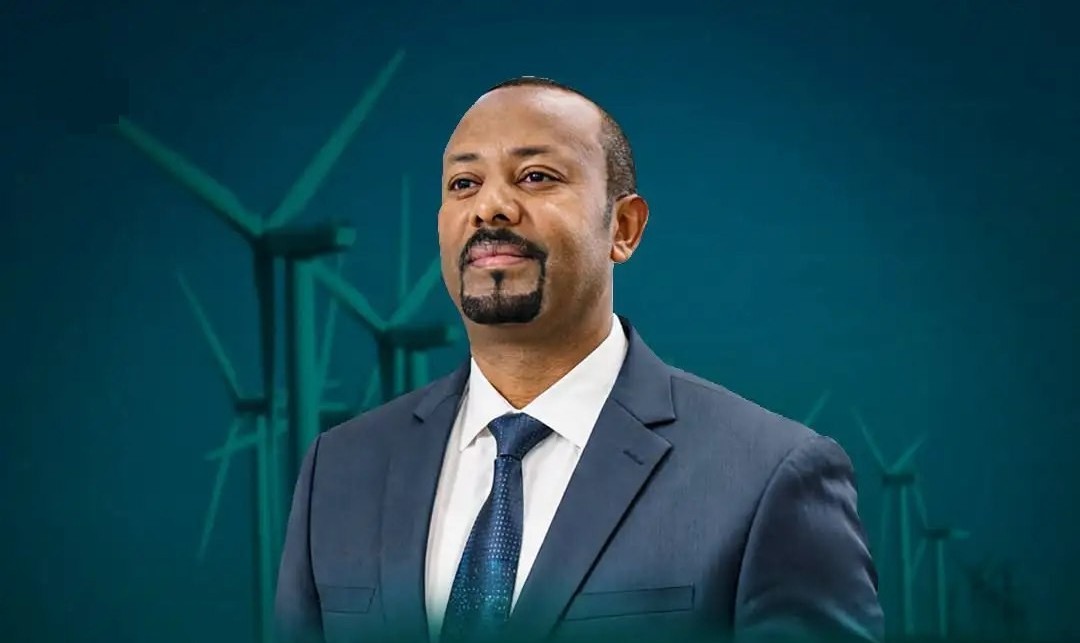
By harnessing its abundant renewable energy resources, Ethiopia is steadily working to become East Africa’s clean energy hub. As Prime Minister Abiy Ahmed (PhD) has put it, expanding renewable energy options is how the country is bringing light to every part of Ethiopia. That message captures both the national vision behind Ethiopia’s green economy strategy and the real progress being made on the ground.
Several key initiatives are driving this effort:
1. Completion of the Grand Ethiopian Renaissance Dam (GERD)
GERD is a mega hydroelectric station with an installed capacity of 5,150 MW — a leap that significantly expands the nation’s total power generation. Beyond supplying reliable electricity to domestic industries, small and medium enterprises, and households, it also earns valuable foreign currency through power exports to neighboring countries.
2. Diversifying Renewable Energy Sources
Alongside hydropower, Ethiopia has brought several wind projects online — Ashegoda, Adama I & II, Ayisha II, and Assela — bringing total wind capacity to roughly 504 MW. Geothermal projects underway at Aluto Langano and Tulu Moye offer another promising avenue for long-term energy security. Meanwhile, solar mini-grids and Solar Home Systems are steadily expanding access in off-grid rural areas.
3. Accelerating Energy Access
Efforts to reach rural and remote communities have brought electricity to thousands of villages and small towns. Powering homes, schools, health posts, and agricultural processing centers has meaningfully improved the quality of life and local services in these areas.
4. Regional Power Integration
Ethiopia has built out regional grid interconnections, exporting clean, renewable-sourced power to Sudan, Djibouti, Kenya, and Tanzania.
5. Private Sector Participation
Through sector-modernizing policy reforms, Ethiopia has opened the door for domestic and international private developers to take part in power generation — easing the financial burden on government and accelerating the pace of expansion.
In conclusion, expanding renewable energy isn’t just about improving daily life for citizens — it’s a marker of Ethiopia’s historic journey toward industrial and economic transformation.