
Electric power is the foundation of a nation’s socio-economic development. It drives industry, expands commerce, modernizes health and education services, and shapes the everyday lives of citizens. Without reliable power, growth in almost every other sector stalls.
Achieving sustainable, inclusive development therefore requires two things working together: expanding access to electricity and improving the quality of the service delivered.
Expanding access means connecting the segments of the population still left out—particularly in rural and remote areas—to the national grid. Closing this gap is not just a technical goal; it’s a matter of social justice, ensuring that all communities, regardless of location, share in the benefits of development.
Where extending the main grid isn’t yet feasible, mini-grids and Solar Home Systems are filling the gap for off-grid communities. Bringing power to newly connected rural areas does more than light homes—it opens the door for small and medium enterprises, creates jobs for young people, and adds value to agricultural produce that would otherwise go unprocessed.
Improving Quality and Reliability
Extending electricity distribution alone does not signify success in the energy sector. Equally critical is delivering high-quality, reliable power to consumers. Frequent, unannounced power outages disrupt industrial manufacturing, cause product waste, impair service delivery institutions, and lead to financial losses for businesses.
Furthermore, poor supply quality and compromised reliability cause voltage fluctuations in both households and industries. It is for these compelling reasons that power availability must be paired with an uncompromising emphasis on quality and reliability.
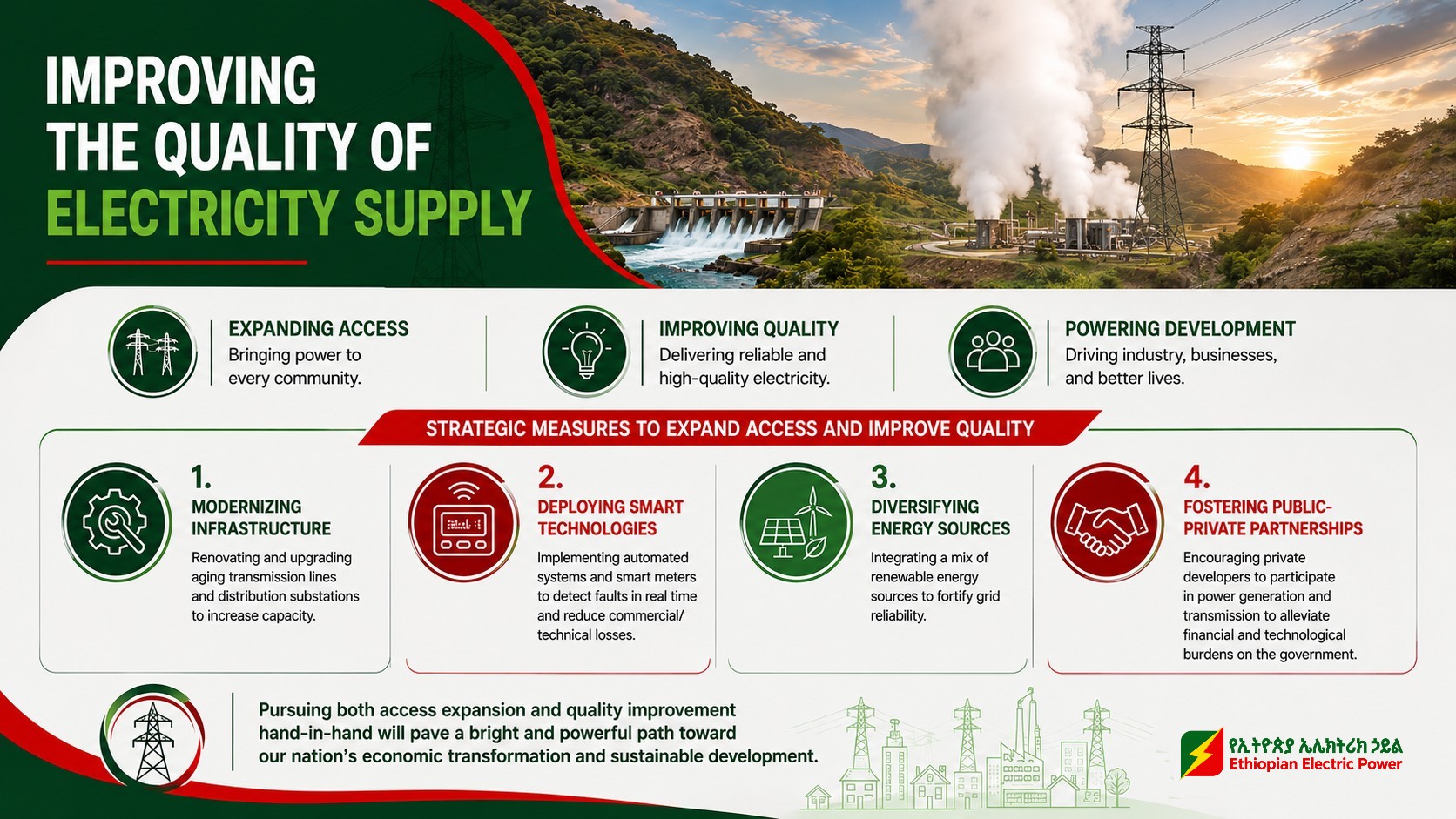
Strategic Measures to Expand Access and Improve Quality:
Modernizing Infrastructure: Renovating and upgrading aging transmission lines and distribution substations to increase capacity.
Deploying Smart Technologies: Implementing automated systems and smart meters to detect faults in real time and reduce commercial/technical losses.
Diversifying Energy Sources: Integrating a mix of renewable energy sources to fortify grid reliability.
Fostering Public-Private Partnerships: Encouraging private developers to participate in power generation and transmission to alleviate financial and technological burdens on the government.
In conclusion, expanding electricity access is not merely a matter of coverage to meet basic social needs; it is fundamentally about enhancing service quality to secure national industrial and commercial competitiveness.
Pursuing both access expansion and quality improvement hand-in-hand will pave a bright and powerful path toward our nation’s economic transformation and sustainable development.