
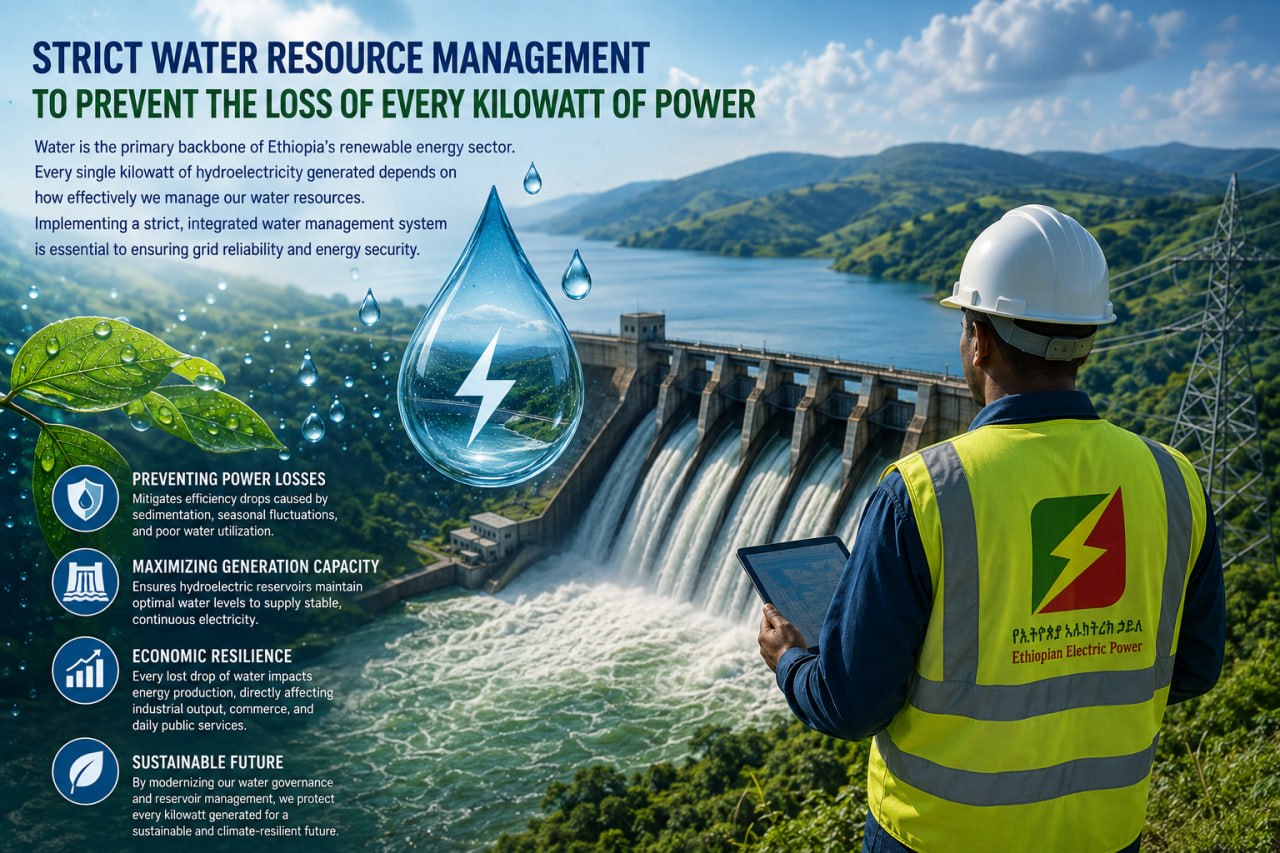
For Ethiopia, water is more than a natural resource. It is the driving force behind much of the country’s renewable electricity generation—and how effectively that water is managed can directly determine how much power reaches homes, businesses and industries.
With hydropower remaining a major pillar of Ethiopia’s energy system, experts and energy sector stakeholders are emphasizing the need for strict, integrated and forward-looking water resource management to protect generation capacity and strengthen grid reliability.
Every drop of water stored in a reservoir represents potential energy. When water is lost or poorly managed, the impact can go far beyond the reservoir itself. Reduced water availability can translate into lower electricity generation, affecting industrial production, commercial activity and essential public services.
Managing water keeps the power flowing
One of the major challenges facing hydropower generation is the changing availability and quality of water.
Seasonal fluctuations, sedimentation and inefficient water utilization can all reduce the amount of electricity that a hydropower plant is able to generate. Effective reservoir management is therefore essential to ensure that available water is used at the right time and in the most efficient way.
Maintaining optimal reservoir levels can help hydropower plants provide more stable and predictable electricity, particularly during periods when water inflows are lower.
For the electricity system, this is ultimately about reliability: the water that enters a reservoir today must be managed carefully so that the electricity it can produce is available when the country needs it most.
Every lost drop has an economic cost
The consequences of inefficient water management are not limited to the power sector.
When hydropower generation falls, industries may face disruptions, businesses can experience reduced productivity, and households and public institutions may face interruptions in electricity services.
In a growing economy where demand for electricity continues to increase, even relatively small losses in generation can have wider economic consequences.
This makes water management an increasingly important part of energy security and economic resilience.
A more integrated approach
Strengthening Ethiopia’s hydropower sector will require water and energy management to be considered together rather than as separate issues.
Modern reservoir monitoring, improved forecasting of water inflows, effective sediment management, efficient water utilization and stronger coordination among institutions can help maximize the value of the country’s water resources.
Climate variability makes this even more important. More unpredictable rainfall patterns and prolonged dry periods can put additional pressure on hydropower generation, making careful planning and efficient reservoir operation essential.
Protecting the power behind development
As Ethiopia expands its electricity generation capacity and works to meet the growing demand for reliable power, protecting the resources behind that generation becomes just as important as building new infrastructure.
Every megawatt of installed hydropower capacity is only as valuable as the water available to operate it.
Effective water governance and modern reservoir management can therefore help ensure that Ethiopia does not simply have the capacity to generate electricity—but can consistently turn that capacity into reliable power for its people and economy.
Protecting every drop of water ultimately means protecting every kilowatt of electricity it can produce.