
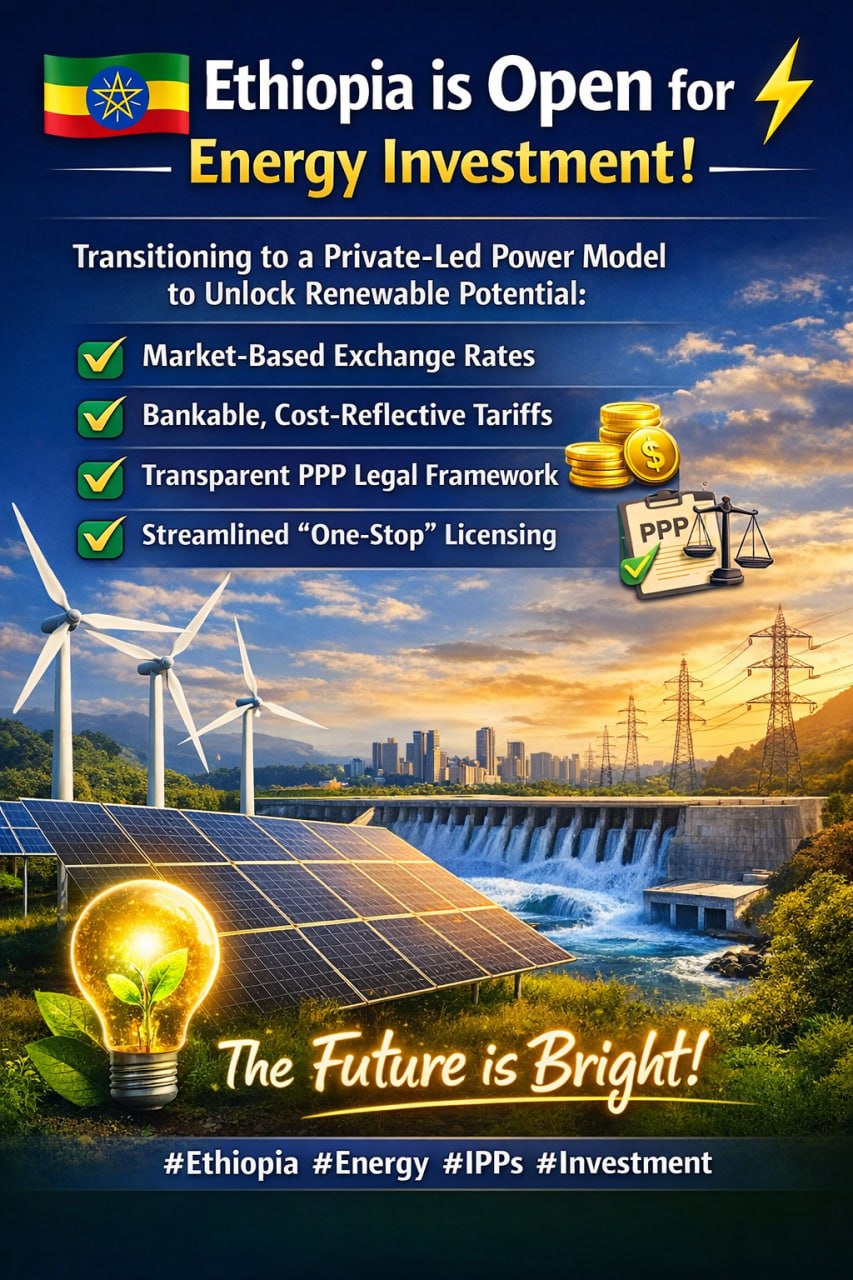
Ethiopia has entered a transformative phase by opening its power generation sector to private investment, particularly through Independent Power Producers (IPPs). This landmark reform creates a powerful opportunity to accelerate economic growth by leveraging private capital, innovation, and technical expertise to unlock the country’s vast renewable energy potential.
🏗️ Key Question: What challenges remain?
Like any large-scale infrastructure investment, challenges persist—particularly in areas such as Power Purchase Agreements (PPAs), land acquisition, and security considerations. However, the government is demonstrating strong commitment to addressing these issues through targeted reforms and institutional improvements.
⚡ Key Enablers Driving Investment
💡 Macroeconomic Reform
The transition toward a market-based exchange rate system is enhancing investor confidence by enabling smoother profit repatriation.
💡 Tariff Reform
Aligning electricity tariffs with the actual cost of production is improving project bankability and long-term financial sustainability.
💡 PPP Legal Framework
The Public-Private Partnership (PPP) proclamation clearly defines investor rights and obligations, ensuring transparency and predictability.
💡 One-Stop Service Initiative
Ongoing efforts to streamline administrative procedures are helping investors secure licenses and land access more efficiently.
As private sector participation expands, Ethiopia stands to significantly enhance the reliability of its electricity supply. This will enable industrial parks to operate at full capacity, stimulate job creation, and strengthen the country’s position as a regional energy hub.
The momentum is clear—Ethiopia is turning energy potential into investment reality.