
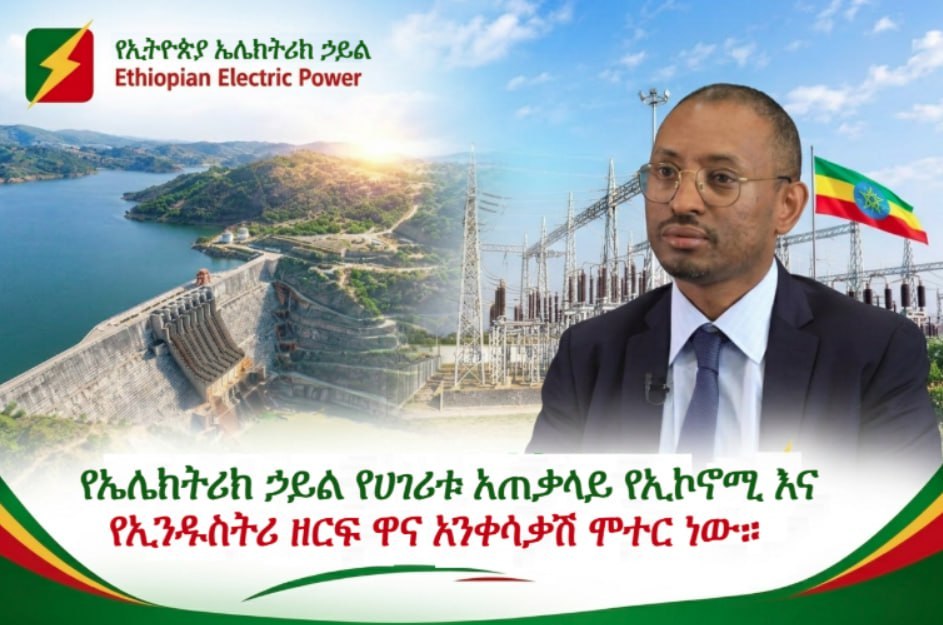
Ethiopian Electric Power (EEP) is advancing a range of power infrastructure projects to meet Ethiopia’s growing electricity demand and support the country’s economic expansion, industrial development, and employment objectives.
EEP Chief Executive Officer Eng. Ashebir Balcha said electricity is a fundamental driver of economic and industrial development, particularly as Ethiopia undergoes rapid socio-economic transformation.
He noted that the country’s growing population, expanding economy, and vast geographic size are contributing to rising demand for electricity.
In response, Ethiopia has developed strategic plans and investment priorities, informed by comprehensive studies, to expand power generation and transmission capacity and meet both current and projected demand.
Eng. Ashebir emphasized that the government’s focus on industrial development further underscores the need for a reliable and adequate electricity supply.
He said dependable power is essential to expanding manufacturing, strengthening productive sectors, and creating employment opportunities, particularly for the country’s growing youth population.
EEP is consequently continuing to implement major power infrastructure projects while strengthening efforts to expand the country’s generation and transmission capacity.
The CEO acknowledged, however, that achieving Ethiopia’s long-term energy objectives will require sustained investment and continued efforts across the sector.
According to Eng. Ashebir, realizing the country’s broader development ambitions and strengthening Ethiopia’s position in Africa’s energy sector will depend on continued investment in power generation, transmission, and supporting infrastructure.
He also stressed the importance of diversifying Ethiopia’s energy mix to ensure a reliable, sustainable, and resilient electricity supply over the long term.
While hydropower remains central to Ethiopia’s electricity system, the country is also pursuing opportunities in solar, wind, geothermal, and natural gas. At the same time, preparatory activities are underway to assess and advance the potential development of nuclear energy as part of the country’s long-term energy strategy.
The CEO further noted that the scale of investment required to meet Ethiopia’s future energy needs cannot be financed through public resources alone.
He said policy reforms and initiatives aimed at attracting private capital, technology, and technical expertise are creating increased opportunities for private sector participation in the energy sector.
In this regard, Eng. Ashebir highlighted the importance of Public-Private Partnerships (PPPs) in mobilizing additional investment and expertise and accelerating the implementation of power infrastructure projects.
He said EEP will continue working closely with government institutions, private investors, development partners, and other stakeholders to expand and modernize Ethiopia’s power infrastructure.
The CEO reaffirmed EEP’s commitment to ensuring that the development of the electricity sector keeps pace with the country’s economic and industrial ambitions and contributes to sustainable national development.