
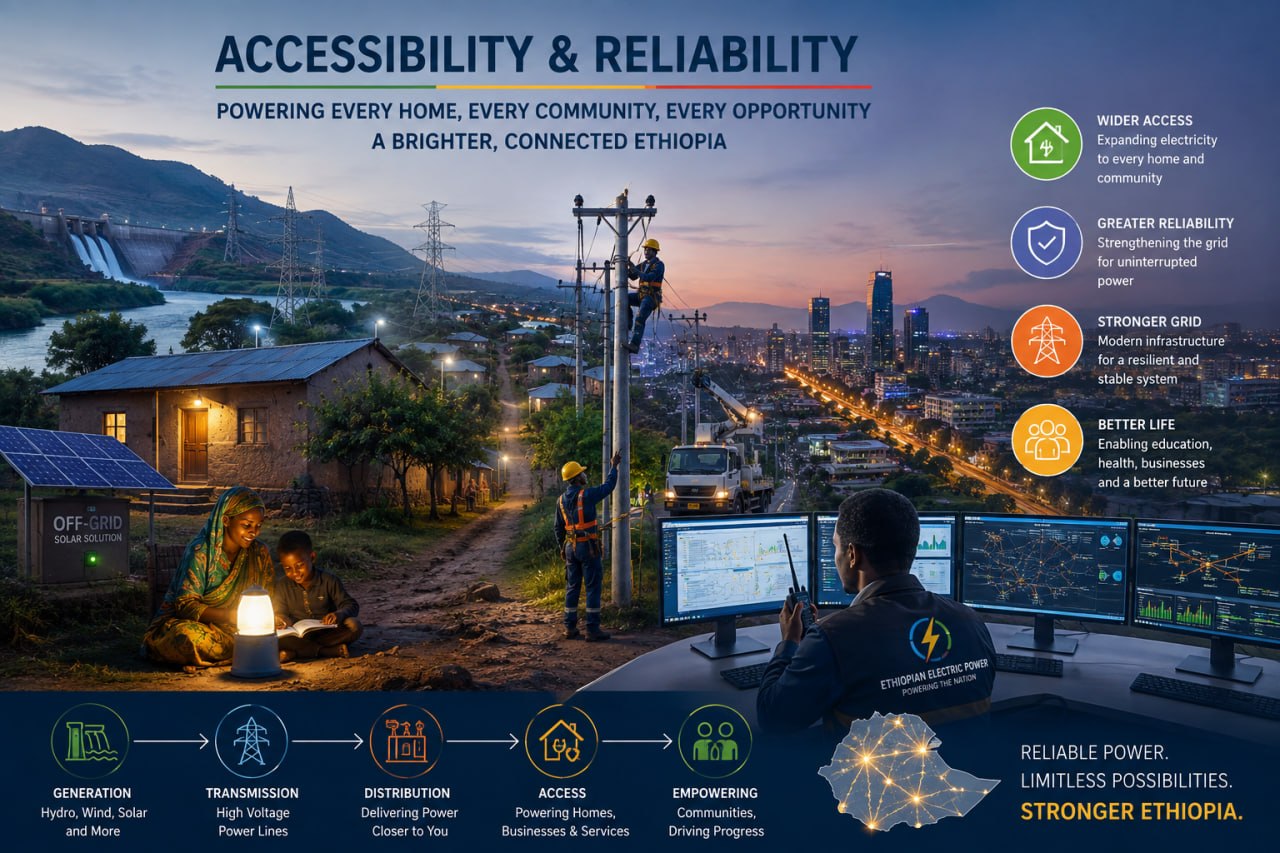
Electricity access and reliability are key engines of socioeconomic transformation and fundamental markers of modern development. Together, they lay the essential groundwork for economic activity, improved living standards, and sustainable growth.
Research in development economics and energy policy consistently shows that reliable, equitable power supply is critical to boosting industrial productivity, building human capacity, and achieving integrated national development goals.
1. Electricity Accessibility
Electricity access is about more than physical infrastructure—it is a matter of socioeconomic justice. It means delivering quality power to all segments of society, in both urban and rural areas, fairly, reliably, and at affordable rates.
Expanding access to rural communities and emerging towns fundamentally strengthens social services. It allows healthcare facilities to safely store vaccines and essential medicines, supports digital learning in schools, and powers clean drinking water projects. It also opens new opportunities for small and medium enterprises (SMEs), youth entrepreneurship, and rural economic activity.
2. Electricity Dependability (Reliability)
The full value of energy access is only realized when supply is stable—free from damaging voltage fluctuations and protected from frequent, unscheduled outages.
Reliable power lets factories, manufacturing plants, and service providers operate at full capacity without costly downtime or wasted materials. It also ensures that critical facilities, from hospitals to modern EV charging networks, keep running without interruption.
Therefore, electricity access and reliability are twin pillars of socioeconomic development: access meets fundamental social needs, while reliability drives economic competitiveness. Modernizing transmission and distribution networks, deploying smart grid technologies, and integrating renewable sources—hydropower, wind, solar, and geothermal—are essential strategies for building an accessible, reliable energy future for all.