
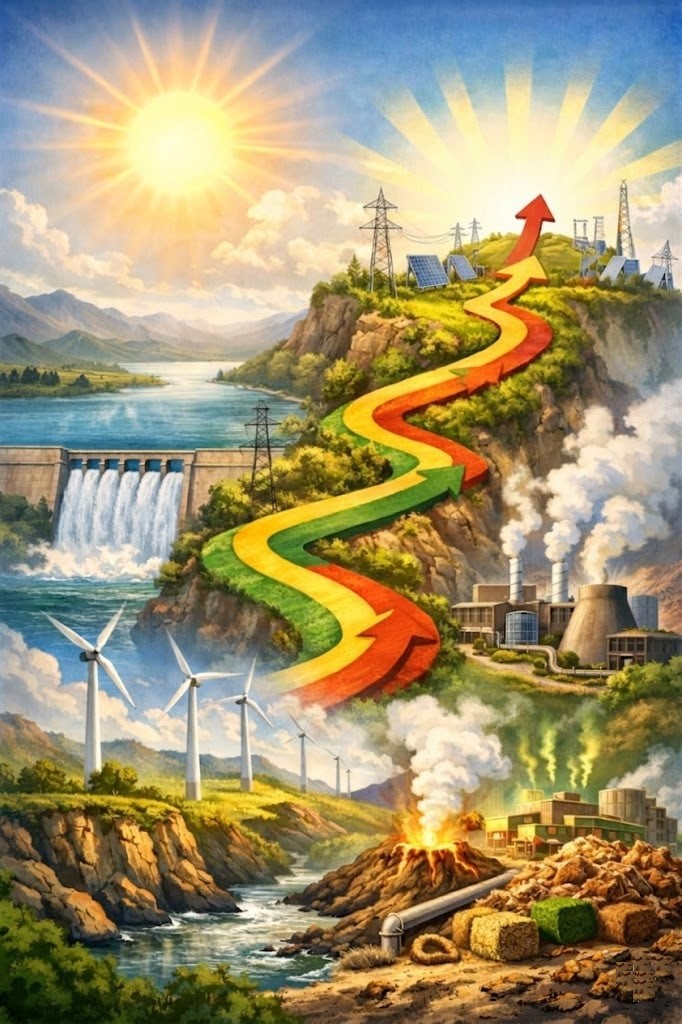
Over the past seven years, since 2018, Ethiopia has recorded remarkable achievements in power generation and infrastructure development. The sector has demonstrated consistent progress, registering an average annual growth rate of around 10 percent.
𝗞𝗲𝘆 𝗣𝗲𝗿𝗳𝗼𝗿𝗺𝗮𝗻𝗰𝗲 𝗛𝗶𝗴𝗵𝗹𝗶𝗴𝗵𝘁𝘀 (𝟮𝟬𝟭𝟴–𝟮𝟬𝟮𝟱)
💡 𝗘𝗹𝗲𝗰𝘁𝗿𝗶𝗰𝗶𝘁𝘆 𝗚𝗲𝗻𝗲𝗿𝗮𝘁𝗶𝗼𝗻: Increased from 15.3 terawatt-hours (TWh) to 29.5 TWh, more than doubling over the period.
💡 𝗜𝗻𝘀𝘁𝗮𝗹𝗹𝗲𝗱 𝗖𝗮𝗽𝗮𝗰𝗶𝘁𝘆: Expanded from 4,500 megawatts (MW) to 9,760 MW.
💡 𝗔𝗻𝗻𝘂𝗮𝗹 𝗥𝗲𝘃𝗲𝗻𝘂𝗲: Grew significantly from 10 billion birr to 75.4 billion birr.
💡 𝗙𝗼𝗿𝗲𝗶𝗴𝗻 𝗖𝘂𝗿𝗿𝗲𝗻𝗰𝘆 𝗘𝗮𝗿𝗻𝗶𝗻𝗴𝘀: Revenue from regional power exports and technology-related services rose from less than 100 million USD to 338.7 million USD.
𝗪𝗵𝗮𝘁 𝗦𝗲𝘁𝘀 𝗘𝘁𝗵𝗶𝗼𝗽𝗶𝗮 𝗔𝗽𝗮𝗿𝘁 𝗚𝗹𝗼𝗯𝗮𝗹𝗹𝘆?
Ethiopia stands among a select group of countries that generate 100 percent of their electricity from renewable energy sources – a milestone that underscores the country’s leadership in sustainable energy development.
Currently, Ethiopian Electric Power operates:
💡 17 hydropower plants
💡 5 wind power plants
💡 1 geothermal power plant
💡 1 waste-to-energy facility
🏗️⚡️ 𝗘𝘅𝗽𝗮𝗻𝗱𝗶𝗻𝗴 𝗣𝗼𝘄𝗲𝗿 𝗜𝗻𝗳𝗿𝗮𝘀𝘁𝗿𝘂𝗰𝘁𝘂𝗿𝗲
Electricity generated from these diverse sources is transmitted through a modern national grid comprising 15,857 kilometers of transmission lines and 148 substations operating at various voltage levels, ensuring reliable delivery of power to consumers across the country. 🚀
💡🇪🇹 𝗣𝗼𝘄𝗲𝗿𝗶𝗻𝗴 𝗕𝗲𝘆𝗼𝗻𝗱 𝗕𝗼𝗿𝗱𝗲𝗿𝘀
Ethiopia’s growing energy capacity is not only lighting the nation but also strengthening its role as a regional energy hub, contributing to economic growth and integration across neighboring countries.