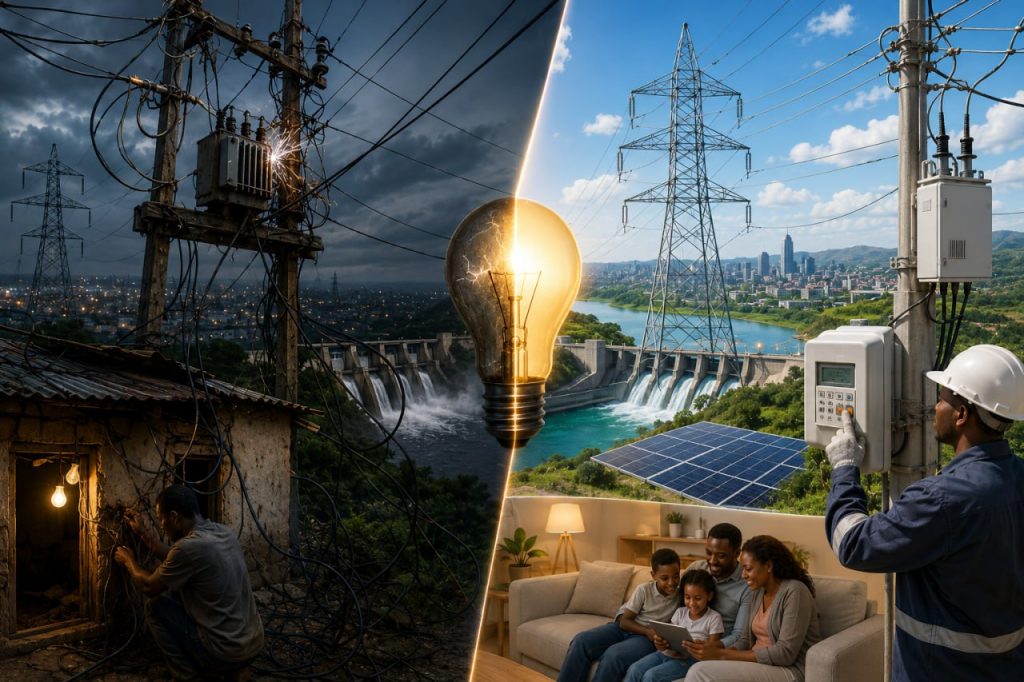
Reducing electricity power loss is not only an energy issue—it is a critical step toward strengthening the national economy. 🇪🇹
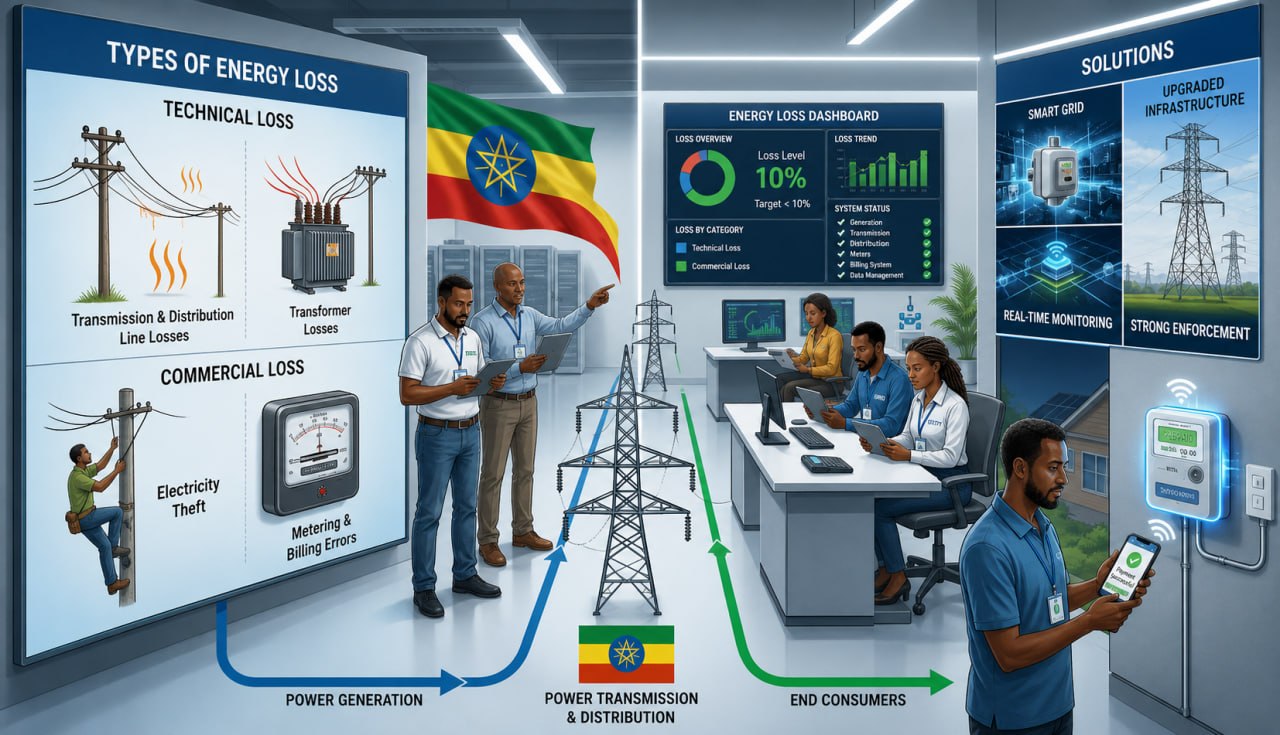
Power loss significantly affects the financial sustainability of utility institutions and undermines the reliability of electricity supply. Broadly, these losses occur through two major categories:
️⃣ Technical Loss
Technical loss refers to the electricity wasted during the transmission and distribution process as power travels from generation stations to end users. These losses are mainly engineering-related and can be addressed through infrastructure improvements.
- Main Causes:
Aging transmission and distribution lines, overloaded transformers, and outdated electrical infrastructure.
- Solutions:
Modernizing infrastructure is key. By deploying Smart Grid technologies, utilities can accurately identify loss-prone sections of the network. In addition, transmitting electricity at higher voltages helps reduce energy losses during transmission.
️⃣ Commercial Loss
Commercial loss refers to electricity that is consumed but not properly billed or collected financially. Unlike technical losses, these are largely linked to operational inefficiencies and human-related factors.
- Main Causes:
Electricity theft (illegal and unauthorized connections), billing and meter-reading errors, and outdated metering systems.
- Solutions:
Expanding the use of Smart Meters and prepaid metering systems, combined with stronger law enforcement, can effectively reduce electricity theft and improve revenue collection efficiency.
By investing in modern technologies, upgrading infrastructure, and strengthening operational systems, Ethiopia can significantly reduce power loss, improve service reliability, and build a more resilient and sustainable energy sector.